


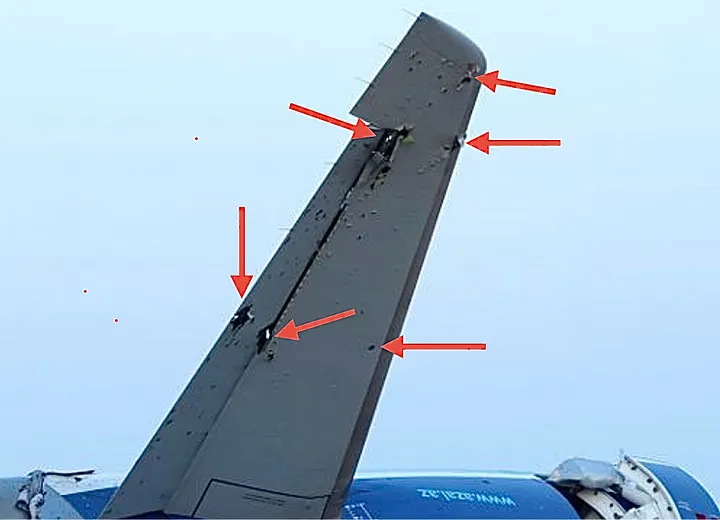
On July 19, 2025, Azerbaijan’s President Ilham Aliyev announced intention to initiate international proceedings against Russia over the December 25, 2024 downing of Azerbaijan Airlines Flight 8243. The crash, which killed 38 of 67 people on board, has been attributed to a Russian surface-to-air missile strike that occurred while the aircraft was approaching Grozny. Let’s explore the implications of this development and challenges ahead.
Initial forum: the ICAO Council
Under Chapter XVIII of the Chicago Convention, the ICAO Council serves as the primary dispute settlement body for disagreements between contracting states relating to the interpretation or application of the Convention when negotiations fail. If Azerbaijan proceeds with its case regarding violations of the treaty, this case would likely first be brought before the ICAO Council.
The duration of ICAO proceedings varies, but similar cases give us an idea. Australia and Netherlands applied to the ICAO Council in 2022 for Malaysian MH17 crash (2014) and Russia was found responsible by the Council in May 2025. The Qatar v. Bahrain, Egypt, Saudi Arabia, and UAE case, which involved aviation restrictions during the 2017 Gulf crisis, took approximately two years from initial filing to the Council’s ruling in June 2018. So, we can expect 2-3 years of proceedings in the ICAO Council.
The Council’s limited sanctioning powers and likely ICJ proceedings
However, the ICAO Council’s decisions are largely declaratory in nature and lack effective enforcement mechanisms. The ICAO cannot impose sanctions, penalties, or other coercive measures against member states for violations of the Chicago Convention (enforcement is expected on a country-to-country basis). Additionally, while the Council finding Russia responsible for shooting of the Flight 8243 can be expected considering solid facts, escalation to the International Court of Justice (ICJ) is imminent. Article 84 of the Chicago Convention provides that any contracting state may appeal decisions of the ICAO Council to an ad hoc arbitral tribunal or to ICJ.
Importantly, both Russia and Azerbaijan are parties to the Chicago Convention without reservations regarding Article 84. This creates a treaty-based jurisdictional basis that would allow a party to appeal an ICAO Council decision directly to the ICJ. This clause was relied on ICJ cases concerning application of the Convention such as Bahrain v. Qatar and India v. Pakistan.
Timeline challenges at the ICJ
ICJ proceedings involving not just aviation disputes, but also other matters are quite lengthy. For instance, Canada anticipate that cases regarding Flight PS752 (shot down by Iran in 2020) “will likely take several years before a resolution is reached”.
President Aliyev acknowledged this reality, stating: “We are ready to wait ten years, but justice must win”. The ICJ’s procedural requirements, including written pleadings, oral hearings, and deliberations, typically result in cases lasting 3-5 years from filing to final judgment – assuming that proceedings in the ICJ will follow the ICAO Council decision.
Russia’s compliance with eventual ICJ ruling?
Azerbaijan’s announced case might face some challenges in the international legal system. Russia is known to flat-out defy ICJ decisions. While ICJ rulings are legally binding on states, they are not enforceable without their approval or compliance. The only formal enforcement mechanism is referral to the UN Security Council under Article 94 of the UN Charter, where Russia’s veto power as a permanent member effectively shields it from enforcement measures.
The Nicaragua v. United States case provides a historical parallel: when the ICJ ordered the US to pay reparations to Nicaragua in 1986, the US simply refused to comply and used its Security Council veto to block enforcement. This precedent suggests that states with veto rights can effectively immunize themselves from ICJ enforcement.
Despite these timeline and enforcement challenges in connection with downing of the AZAL Flight 8243, international legal pressure retains value. Successful legal proceedings could serve several important functions: establishing authoritative legal findings, documenting state responsibility, creating foundations for future reparations claims, and maintaining pressure for eventual compliance. Considering sensitive nature of the civil aviation safety as a matter of boarder international concern, any judgment favorable to Azerbaijan is a win – one way, or another.